

Frankenstein and the Manosphere
Monstrosity and Victimhood

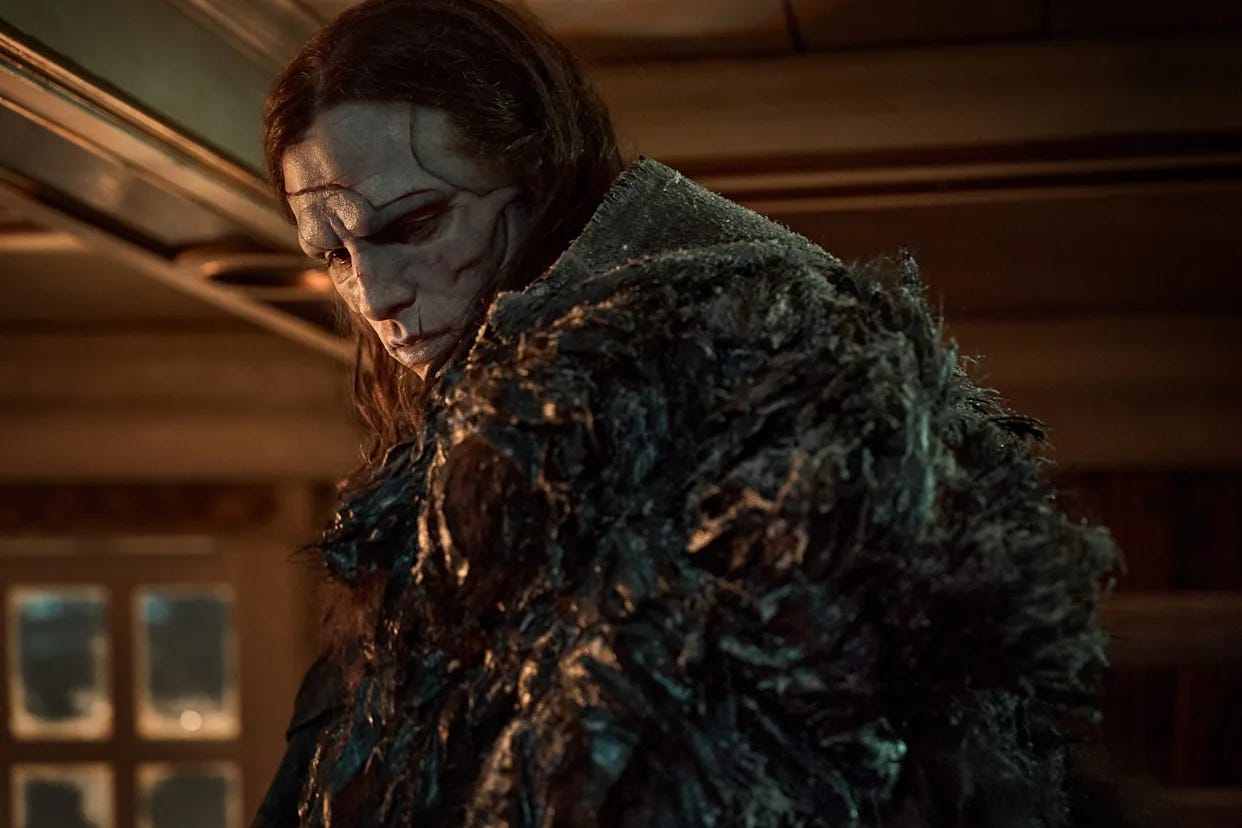
Known as the first true science fiction novel, Mary Shelley's Frankenstein never left its throne of cultural relevance. But recently, even more people fell in love with the story as the celebrated auteur, Guillermo del Toro, released his adaptation of the novel. The contextualization in this piece is important because del Toro's movie somewhat frees the audience from the novel's moral exercises, and the roles represented by the characters need to be assigned correctly if we are to live with the film's romanticism.
Now, how does the manosphere relate to this? First, let us know what it is.
According to UN Women:
The manosphere is an umbrella term for online communities that have increasingly promoted narrow and aggressive definitions of what it means to be a man – and the false narrative that feminism and gender equality have come at the cost of men’s rights.
These communities think that men are oppressed, and their "freedom" will come from subjugating women.
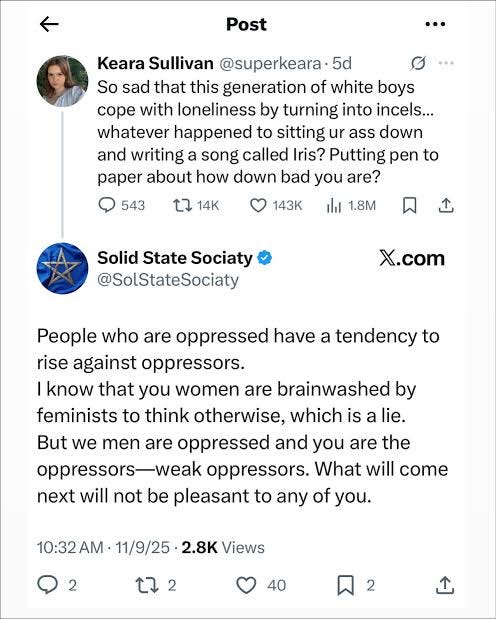
The manosphere archetype mostly mentioned here are the “involuntary celibates”/incels.

At face value, the character who displays the traits of incels is the monster. These men claim to suffer under a supposed "look-based hierarchy", just like the creature who experiences intense discrimination due to his monstrous, overbearing appearance. Victor Frankenstein finds his creation appalling and abandons him, and as the monster ventures outside, he gets constantly attacked. This makes him indignant, hurt, and fearful. The insecurities over their looks cause many incels to become antisocial, much like the monster who ignores human settlements and lives in unpopulated places. So far, the resemblances seem benevolent. But the creature takes a dark path. He kills Victor's brother, William, and frames Justine Moritz, the family's female servant, for the murder. This leads to her execution. His explanation about Justine is:
Here, I thought, is one of those whose joy-imparting smiles are bestowed on all but me.
[…]
The thought was madness; it stirred the fiend within me—not I, but she shall suffer: the murder I have committed because I am forever robbed of all that she could give me, she shall atone. The crime had its source in her: be hers the punishment!
This shows that the differences between the monster of Shelley’s novel and del Toro’s film are stark. The creature from the novel is not like the innocent victim of the film. His actions range from ambiguous to damning. Getting attacked by humans and finding himself deprived of love and connection has made him vengeful. The possibility of the woman's rejection was enough for him to ruin her life. Again, not too different from the incels, some of who have descended to mass shootings and other forms of violence against women, all because of the notion that they deny them relationships and sex. Despite the monster’s hatred for people, he craves connection. So much so that he persuades Victor to make a female companion for him, saying:
You must create a female for me, with whom I can live in the interchange of those sympathies necessary for my being.
[…]
I demand it of you as a right which you must not refuse to concede.
This also mirrors the mentality of incels, who think they are “owed” sexual contact by women. These similarities can make some people feel tempted to compare del Toro’s victimized hero to modern incels. After all, in both the novel and the film, Victor Frankenstein is the irresponsible man who condemns his creature to his ill fate. The monster is an unfortunate sufferer of circumstances. It is possible to feel that like Frankenstein’s creature, the people facing inequalities are the incels. Many do believe that. Things have gone far enough to suggest the “redistribution of sex” to appease them. In an op-ed in The New York Times, Ross Douthat writes:
I expect the logic of commerce and technology will be consciously harnessed, as already in pornography, to address the unhappiness of incels, be they angry and dangerous or simply depressed and despairing.
By now, some readers have reached the correct conclusion: the victimization of a creature sewn together from corpses and doomed by his grotesque visage is not similar to the experiences of men; nor should their feeling or actions mirror each other. The “problems” of incels revolve around their looks, social lives, mental health, and the lack of sexual experience, while for women, the grounds of discrimination vary from gender apartheid to unfathomable bias against them. From being victims of most headline crimes to making up-to 90% of adult rape victims, the list of disadvantages women face are long. The manosphere crowd deny the evidence of misogyny and sexism (in spite of their reputable sources), and spread false "theories" and statistics (such as the misquoting of the Pareto principle which convinced them that 80% women have sex with 20% of men) to propagate their narrative. Their accusations against women such as “hypergamy” and manipulation have also been proven to be false. Besides, many of the “female privileges” they talk about are non-existent: women are not favored in family courts, or in courts in general. Statistically, the rate of false rape allegations are not higher than the rate of false accusations in any other type of crime. The outcry over false rape allegations is quite ironic as well considering the fact that men are more likely to get raped than be falsely accused of raping. Moreover, the issues they claim to face often affect women more than men. Women are judged more harshly over their appearances and attractiveness than men are; so intensely that one study found women were over 16 times more likely than men to suffer employment-related discrimination because of their weight. Also, attractiveness seems more consistently beneficial for men than for women. Attractiveness is even detrimental for women in some instances, but not for men. Here, their claims of “look-based” discrimination fall apart. When it comes to mental health, women are three times more likely than men to experience common mental health problems. They are also three times more likely to experience eating disorders (including Anorexia, the psychiatric disorder with the highest mortality rate) than men. When it comes to suicide, men are four times more likely to die by suicide than women, but women are three times more likely to make suicide attempts compared to men. Both genders suffer from mental health issues at alarming rates, but societal and cultural factors contribute to these disparities, where women are victimized by traditional gender roles, sexist social conditions, and exposure to violence, which disproportionately affect them.
(Note that most of the data cited are from developed Western countries. The discrimination against women in less developed countries are significantly worse.)
Thus, the issues these communities weaponize are often overblown and more widespread issues are co-opted to paint themselves as the victims.
Despite their claims to advocate for men, these communities constantly berate incels and coerce them into suicide. It is so prevalent that there is a forum on the incels.is website called 'Suicidefuel'. They also perpetuate racism and other forms of bigotry. The obsession with looks in these groups does serious damage to the members, who are already mentally and emotionally vulnerable. But it is important to mention that nothing those communities contribute would’ve justified their aggression against women. So far, at least 50 civilians have been murdered by incels through violent attacks, and the comparatively passive damages they do to women are too numerous to mention.
Again, none of this resembles the mentality of Frankenstein’s monster. Despite his troubles, he tried to “compensate” not by obsessing over his looks, but through helping people. His love and compassion is apparent in his treatment of De Lacey and his family, the owners of the cottage he took shelter in. He speaks fondly of Safie, the fiancée of Felix (De Lacey’s son). He understood the oppression she faced as a Turkish woman, and related to her experience of being controlled by her father. When he asked Victor Frankenstein to make him a mate, it came from the need to find somebody who could understand his experience, which no other creature shared. He did not start with a low opinion of her, nor did he show any entitlement of sex. As he says:
My companion will be of the same nature as myself, and will be content with the same fare. We shall make our bed of dried leaves; the sun will shine on us as on man, and will ripen our food. The picture I present to you is peaceful and human, and you must feel that you could deny it only in the wantonness of power and cruelty.
He committed most of the immoral acts from the desperation to attract the attention of his creator, who had been complicit in the monster’s oppression. At the end, he expresses grave regret over those choices:
But it is true that I am a wretch. I have murdered the lovely and the helpless; I have strangled the innocent as they slept, and grasped to death his throat who never injured me or any other living thing.
[…]
You hate me; but your abhorrence cannot equal that with which I regard myself. I look on the hands which executed the deed; I think on the heart in which the imagination of it was conceived, and long for the moment when these hands will meet my eyes, when that imagination will haunt my thoughts no more.
The creature's crimes did not have their “source” in his victims. It was the antagonism from Victor (the abysmally powerful patriarch in his story) that led him to cruelty. In this way, Victor resembles the leaders of the manosphere who constantly demean the members and coerce them towards violence.
But the actions of a creature ousted from the human experience, living in complete isolation, and existing without an identity are not justifiable or befitting for men born into patriarchal privilege; even the expectations of the male gender role come from being put on a pedestal.
Now, let us consider who fits the creature’s narrative within a gender-binary context. Which gender have had to relentlessly fight for basic human rights? It is not a coincidence that a 19-year-old Mary Shelley wrote a novel as grim and revolutionary as Frankenstein. Women, who have their existences minimized to their looks and sex appeal, face intense oppression, and experience sexism within the hetero-normative frame of relationships (which is forced onto women of other sexual orientations), can relate to the creature’s experience more than the incels. It is unanimously agreed upon in literary societies that Frankenstein is a gender-critical and feminist text.
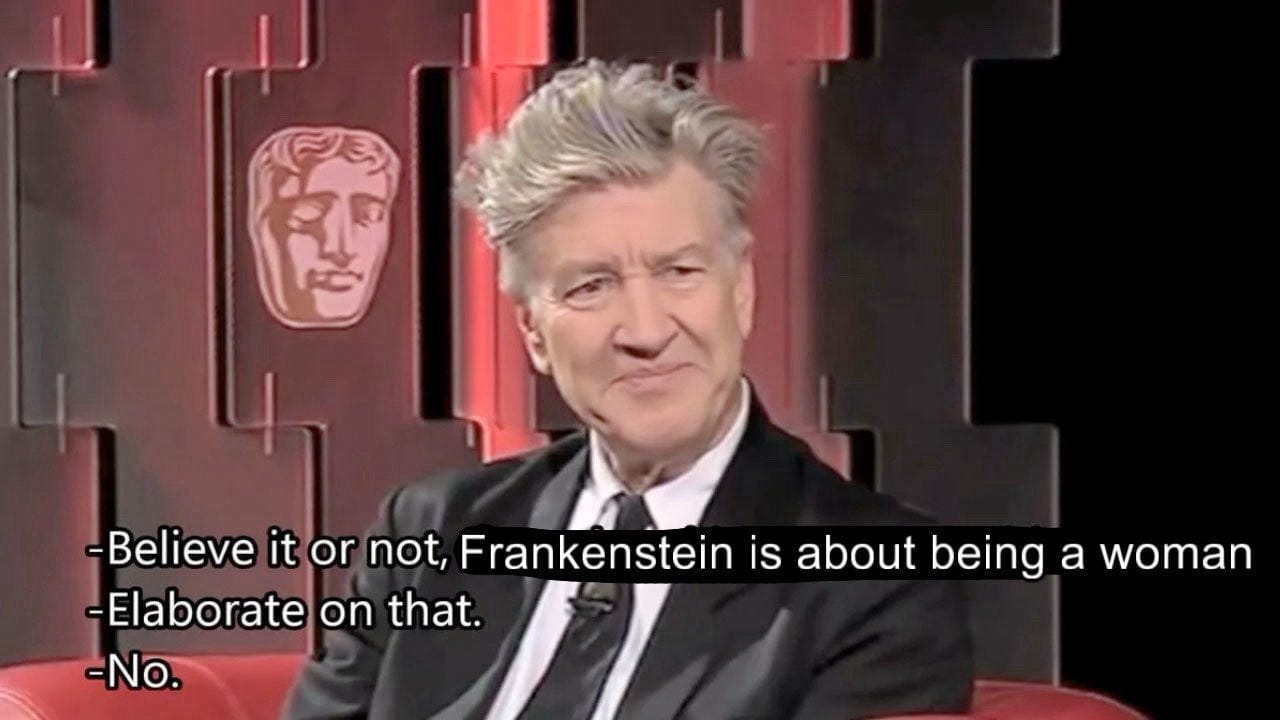
Men of the manosphere have a habit of misinterpreting radical arts and manipulating them to fit their agenda. The Matrix (1999), American Psycho (2000), and Fight Club (1999) are victims of that. If that happens to Frankenstein, at least we have set the narrative straight here.
It is terrifying to exist as a woman with the knowledge of such vitriol against you. All of it also seems bafflingly pointless because these communities do not even help men at the price of women's safety, but alienate and exploit them further. Many analytic pieces on the manosphere end with suggestions to get men out of those hellscapes. But as we’ve learned time and time again, these people do not pay heed to women. So, I don’t think it is possible for me to help them. But if I had to leave a message, it would be this:
Men, do not make monsters of yourselves.

Resources:
Shelley, M. (1831). Frankenstein.
Bates, L. (2021). Men who hate women: from incels to pickup artists : the truth about extreme misogyny and how it affects us all. Sourcebooks.
Divider by firefly-graphics on Tumblr.
"Men do not make monsters of yourselves" such a good piece!
I want to add that this past week I watched the 2004 phantom of the opera remake and I think the phantom is right there with frankenstein, seemingly toeing the line of the manosphere. He's isolated, deformed, and looking for companionship and just like frankenstein he commits some heinous crimes but quickly feels remorse and acquiesces. Both characters experience real discrimination the manosphere "thinks" they experience and I feel like you can't help but want both characters to find love and acceptance. As for the incels of the manosphere you kinda just hope they find a good therapist.
i want to write like you when i grow up